| Genre | Utopian novel |
| Title | Looking Backward |
| Author | Edward Bellamy |
| Impact | Inspired formation of utopian communities • Continues to provoke debate and discussion |
| Themes | Highly centralized society • Technologically advanced • Socialist economic system |
| Setting | United States in the year 2000 |
| Publication year | 1870 |
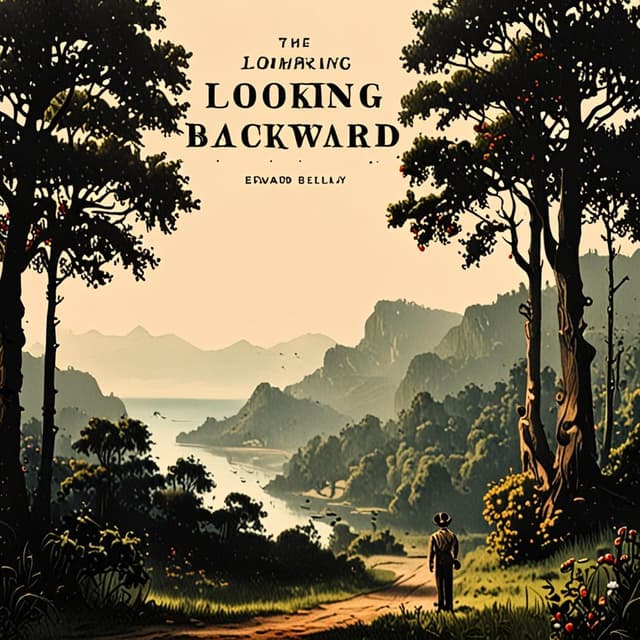
"Looking Backward: 2000-1887" is a seminal work of utopian fiction written by American author Edward Bellamy and published in 1870. Set in the year 2000, the novel imagines the United States as a highly organized, technologically advanced, and socialist-leaning society, a dramatic departure from the country's capitalist roots in Bellamy's own time.
The story follows the protagonist, Julian West, a wealthy young man living in Boston in the late 19th century. After falling into a hypnosis-induced trance, West awakens in the year 2000 to find the world radically transformed. The United States has undergone a peaceful transition to a centralized, bureaucratic socialist system known as the "Nationalized Industrial Army".
In this futuristic society, all citizens are enrolled in a national labor force that allocates resources and coordinates production. Technological advancements have eliminated the need for manual labor, enabling a life of leisure and culture. Poverty, crime, and class conflict have been eliminated, and the government provides for the basic needs of all citizens.
West, bewildered by this new world, is guided through the workings of the utopian society by his host, Dr. Leete, and Leete's daughter Edith, with whom West eventually falls in love. As West adapts to the radically different norms and values of the 21st century, he comes to see the flaws and injustices of the 19th century capitalist system he left behind.
Bellamy wrote "Looking Backward" against the backdrop of the ongoing Industrial Revolution in the United States, which was bringing rapid economic and social changes. The novel reflects Bellamy's concerns about the growing concentration of wealth and power in the hands of industrial magnates, as well as the stark divide between the privileged classes and the urban poor.
The book's central themes include:
Bellamy's utopian vision was informed by the writings of earlier utopian thinkers like Charles Fourier and Robert Owen, as well as emerging sociological and economic theories of the time.
"Looking Backward" was an immediate and sensational bestseller, selling over a million copies worldwide by the turn of the century. It inspired the formation of numerous real-world utopian communities, most notably the Nationalist Clubs, which sought to realize Bellamy's vision through political and economic reform.
The novel's influence extended far beyond literature, shaping political and social thought well into the 20th century. Its depiction of a highly centralized, technocratic society proved both inspiring and unsettling, foreshadowing both the promise and perils of the modern welfare state.
While Bellamy's utopian vision has been criticized as overly rigid and authoritarian by some, the book remains an important and thought-provoking work that continues to resonate with readers today. Its exploration of the balance between individual liberty and social equality, and the role of the state in managing the economy, ensure that "Looking Backward" will endure as a classic of the utopian genre.
